First Signs Of Bone Cancer In Dogs : Bone Cancer Osteosarcoma Gap / The symptoms of skin cancer vary depending on the cancer, but in general, the best thing you can do to catch skin cancer early is to keep an eye on any strange lumps or bumps on your dog's body.. Drastic decline in their appetite or no interest in eating at all Unwillingness to exercise and play, or a decrease in stamina. Lameness, which can be intermittent or constant Tumor growth destroys healthy tissue, causing the bone to swell. These are the most common symptoms when a tumor affects a limb.
Osa is a malignant tumour of bone and it is the most common bone tumour found in dogs. Canine cancer is similar to human cancer in that it typically progresses through a series of stages, from i to v. A lump or a bump, a wound that doesn't heal, any kind of swelling, enlarged lymph nodes, a lameness or swelling in the bone, abnormal bleeding. When the tumor first appears, the site usually looks slightly swollen. Unwillingness to exercise and play, or a decrease in stamina.
Https Encrypted Tbn0 Gstatic Com Images Q Tbn And9gcr Ghsksegkroqcrteuhdhcxpbqwuwgb Sbet6fvflixsggfe V Usqp Cau from Unfortunately, one of the most common initial signs of hemangiosarcoma involves sudden collapse due to massive internal bleeding, usually from a ruptured spleen. So any time an animal isn't. If your dog has an osteosarcoma of the limb (appendicular osteosarcoma), lameness or a distinct swelling may be noted. Sadly, the outlook for a dog with an osteosarcoma is very poor. If you notice any of these symptoms in your pet, schedule an appointment. Symptoms and types many signs of bone cancer are subtle. In some cases, dogs suffering from bone cancer will appear tired or have anorexia. It mostly affects the limbs ( appendicular skeleton) but it can also develop in the skull, spine and the ribs ( axial skeleton).
Osteosarcomas are painful tumours that often first appear as hot, solid, tender swellings.
Since dogs usually show only mild warning signs, cases of hemangiosarcoma may not be detected until the cancer has reached an advanced stage. Canine bone cancer symptoms osteosarcoma tumors typically form in a dog's long bones, or growth bones, and are found frequently below the elbow or near the knee or shoulder. Unsurprisingly, lameness is one of the main symptoms of bone cancer in dogs. In sublingual tumors, toenails may fall off or get infected. Tumors and unusual growths unnatural swelling in tissue and bones This is often the first sign of a tumor in the skull, jaw, or ribs. But sometimes there are little or no signs, at least early on. What are the signs of osteosarcoma? Sometimes these masses will ulcerate and bleed. Osteosarcoma usually develops deep within the bone. Osteosarcoma is the most common primary bone tumor of dogs and nearly 10,000 dogs are diagnosed with this cancer each year. So, if a dog that first got cancer in their mouth for instance, or in their bones, they risk the chance of it metastasizing through the bloodstream to the lungs. Since the tumor starts deep within the bone, your dog may not feel any pain or discomfort in the early stages.
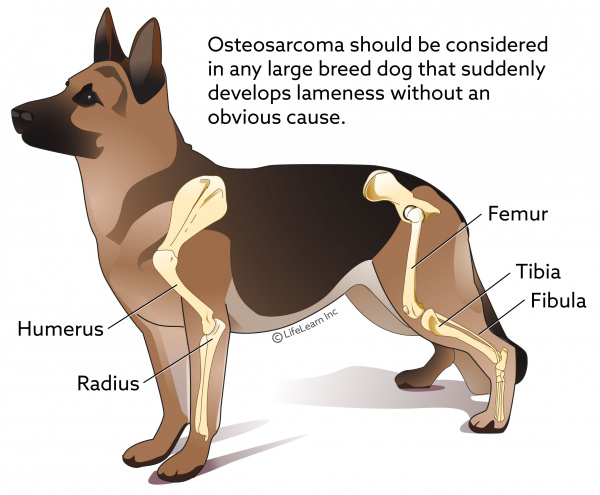
The tumour occurs more often in the front legs, commonly affecting the bottom of the radius (wrist joint) or the top of the humerus. Difficulty eating if a tumor affects the. Red flag signs include severe lameness, swelling and character change. Sneezing, difficulties in breathing, nose bleeds or other nasal discharges are common symptoms of bone cancer in dogs when the cancer has occurred in or around the nasal cavity. When the tumor first appears, the site usually looks slightly swollen.
Osteosarcoma Bone Cancer In Dogs from www.pethealthnetwork.com Early signs of this cancer may be a raised bump or white skin mass on your dog. Bone cancer is also accompanied by a lot of swelling. Or a dramatic, sudden fracture. Dogs get cancer at roughly the same rate as humans. The cancer usually originates inside the bone and spreads to the outside of the limb. As the tumor grows and damages surrounding bone and tissue, your dog may start to show signs including: Diagnosis of canine osteosarcoma diagnosis is based on clinical signs, imaging, and biopsy. Some of the most common signs of dog cancer are:
In sublingual tumors, toenails may fall off or get infected.
Red flag signs include severe lameness, swelling and character change. It mostly affects the limbs ( appendicular skeleton) but it can also develop in the skull, spine and the ribs ( axial skeleton). These are the most common symptoms when a tumor affects a limb. A lump or a bump, a wound that doesn't heal, any kind of swelling, enlarged lymph nodes, a lameness or swelling in the bone, abnormal bleeding. Tumors and unusual growths unnatural swelling in tissue and bones The cancer usually originates inside the bone and spreads to the outside of the limb. Osteosarcoma usually develops deep within the bone. As the tumor grows and damages surrounding bone and tissue, your dog may start to show signs including: Bone cancer is also accompanied by a lot of swelling. In some cases, dogs suffering from bone cancer will appear tired or have anorexia. Regardless of your dog's age, be proactive by looking for early symptoms that could indicate cancer. Since dogs usually show only mild warning signs, cases of hemangiosarcoma may not be detected until the cancer has reached an advanced stage. Most of the time pain will be caused by arthritic issues or joint or muscle diseases, but cancer has also been known to get into bones and cause your dog some pain.
Canine cancer is similar to human cancer in that it typically progresses through a series of stages, from i to v. What are the signs of osteosarcoma? Sometimes these masses will ulcerate and bleed. Dogs get cancer at roughly the same rate as humans. A lump or a bump, a wound that doesn't heal, any kind of swelling, enlarged lymph nodes, a lameness or swelling in the bone, abnormal bleeding.
Osteosarcoma In Dogs Vca Animal Hospital from vcahospitals.com Sadly, the outlook for a dog with an osteosarcoma is very poor. In addition to its stages, cancer is defined by grades, which indicate how aggressively the disease is behaving within the dog. When the tumor first appears, the site usually looks slightly swollen. Unsurprisingly, lameness is one of the main symptoms of bone cancer in dogs. The cancer usually originates inside the bone and spreads to the outside of the limb. Signs of cancer in dogs. The tumour occurs more often in the front legs, commonly affecting the bottom of the radius (wrist joint) or the top of the humerus. Early signs of this cancer may be a raised bump or white skin mass on your dog.
This is often the first sign of a tumor in the skull, jaw, or ribs.
In fact, cancer accounts for almost half of the deaths of dogs over 10 years of age. If your dog has an osteosarcoma of the limb (appendicular osteosarcoma), lameness or a distinct swelling may be noted. Malignant bone cancer, most common in large dogs; If you notice any of these symptoms in your pet, schedule an appointment. Or a dramatic, sudden fracture. But sometimes there are little or no signs, at least early on. Regardless of your dog's age, be proactive by looking for early symptoms that could indicate cancer. A lump or a bump, a wound that doesn't heal, any kind of swelling, enlarged lymph nodes, a lameness or swelling in the bone, abnormal bleeding. In sublingual tumors, toenails may fall off or get infected. Dave ruslander also has stated while dogs over 10 have a higher risk of developing cancer, 50% of those cancers can be treated if caught early. Bone cancer is also accompanied by a lot of swelling. Some of the most common signs of dog cancer are: The clinical signs for appendicular osteosarcoma range from mild lameness with some evidence of pain to pathological fractures.